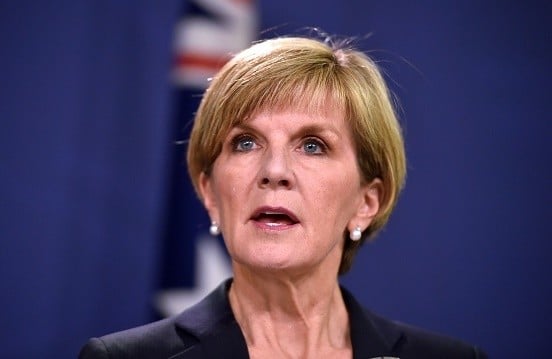
Julie Bishop's Fortune: Is It $5 Million or $50 Million? Unpacking the Latest Figures
Julie Bishop, an iconic figure in Australian politics and diplomacy, has consistently captivated public interest, not just for her formidable career but also for speculation surrounding her financial standing. For years, various sources have estimated Julie Bishop's net worth to be around $5 million. However, more recent figures and projections have thrown a much larger number into the mix: upwards of $50 million. This significant discrepancy begs the question: what is Julie Bishop's true fortune, and what factors contribute to these widely varying estimations?
Understanding the wealth of public figures like Julie Bishop requires delving into their career trajectory, both within and outside the political arena. Her journey from a distinguished legal career to holding some of the highest offices in Australian government, and now to prestigious international roles, paints a clear picture of an individual with substantial professional earning power and financial acumen. Let's explore the milestones that have shaped her financial landscape and try to reconcile these intriguing figures.
The Foundations of Wealth: Law, Business, and Early Political Life
Before stepping onto the national political stage, Julie Bishop forged an impressive career in the legal sector, a path often associated with significant financial reward. Born in Lobethal, South Australia, in July 1956, Bishop pursued a rigorous academic journey that laid a robust foundation for her future success. She graduated from the University of Adelaide, a prestigious institution, and further honed her skills at the renowned Harvard Business School. These qualifications positioned her for a high-flying career in commercial law.
Her tenure at the international law firm Clayton Utz was particularly impactful. Rising to the position of Managing Partner of the firm's Perth office, Bishop was at the helm of a major legal practice. Partners in such firms typically command substantial salaries and profit shares, easily placing her in a high-income bracket during this period. This phase of her life undoubtedly provided the initial bedrock of her personal wealth, accumulating significant savings and investments long before she entered federal parliament.
In October 1998, Bishop transitioned from the demanding world of commercial law to public service, becoming the Member of Parliament (MP) for Curtin. While parliamentary salaries are generous, they are often less than what top-tier commercial lawyers earn. However, this period still contributed steadily to her superannuation and overall financial stability. Early ministerial roles under Prime Minister John Howard, such as Minister for Ageing (2003–2006) and Minister for Education, Science and Training (2006–2007), also came with increased salaries and responsibilities. To understand how these early career choices laid the groundwork, you might find more insights in Julie Bishop Net Worth: Unpacking Her Wealth from Law to Politics, which further explores the origins of her fortune.
High Office and the Public Eye: Minister for Foreign Affairs and Deputy Leader
Julie Bishop's political career reached its zenith with her appointments as Deputy Leader of the Liberal Party (from 2007 to 2018) and, most notably, as Australia's first female Minister for Foreign Affairs (2013 to 2018). These roles are among the most powerful and visible in Australian government, commanding substantial salaries commensurate with their immense responsibilities. As Deputy Leader, she navigated a tumultuous period with three different Liberal leaders—Brendan Nelson, Malcolm Turnbull, and Tony Abbott—demonstrating remarkable resilience and political acumen.
As Foreign Minister, Bishop was a prominent figure on the global stage, dealing with critical international issues ranging from the shooting down of Malaysia Airlines Flight 17 to complex foreign aid programs and the fight against ISIL. While these positions come with significant public scrutiny and financial transparency requirements, the salaries for such roles are substantial, contributing year after year to an individual's accumulated wealth and retirement benefits. For instance, a Member of Parliament's base salary in Australia is over $200,000, with ministerial roles adding significantly to that figure, often well over $300,000-$400,000 for senior positions. Over two decades in parliament, this steady, high income, combined with superannuation, would undoubtedly build a substantial financial base.
Beyond Salary: Investments and Assets
It's crucial to remember that net worth extends far beyond just salary. Throughout her extensive career, it is highly probable that Bishop made astute investments in property, superannuation, and other financial assets. Individuals with her background and financial intelligence typically manage their earnings strategically to ensure long-term growth. Her legal background would have provided her with a keen understanding of financial structures and investment opportunities.
Life After Politics: A New Chapter of Wealth Accumulation
The transition from a high-profile political career often marks a significant shift in a public figure's earning potential. For many, post-political life can be even more financially lucrative than their time in office, and Julie Bishop is a prime example. After retiring from politics in April 2019, Bishop embarked on a new phase that has seen her take on several prestigious and financially rewarding roles.
- Chancellor of the Australian National University (ANU): Commencing her term in January 2020, Bishop became the first woman to hold this esteemed position. While not a full-time executive role, the Chancellor position typically involves significant stipends, public speaking engagements, and an expanded network that can lead to further opportunities.
- United Nations Special Envoy for Myanmar: In April 2024, Bishop was appointed to this critical international role, highlighting her continued global relevance and diplomatic skill. Such appointments often come with attractive remuneration packages and allowances, reflecting the importance of the work.
- Corporate Directorships and Consultancies: High-profile former politicians are highly sought after for their experience, networks, and strategic insights. It is common for them to secure lucrative board positions in major corporations or establish consultancy practices. While specific details of Bishop's private sector engagements are not always public, her extensive experience makes her a highly valuable asset in various business sectors.
- Speaking Engagements: As a sought-after speaker on topics ranging from geopolitics to leadership and gender equality, Bishop commands substantial fees for her appearances at conferences, corporate events, and public forums. This is a significant income stream for many former heads of state and senior ministers.
These post-political endeavors, combined with a lifetime of accumulated assets and a well-managed investment portfolio, can rapidly increase a public figure's net worth. For a deeper dive into her evolving financial journey post-politics, consider reading From Foreign Minister to UN Envoy: Julie Bishop's Evolving Net Worth Journey.
Deconstructing the Numbers: Is It $5 Million or $50 Million?
The core question remains: why such a vast difference between the $5 million and $50 million estimates for Julie Bishop's net worth?
The $5 million figure, often cited by sources like "Celebrity Net Worth," is likely an older, more conservative estimate. Such figures typically reflect publicly available information, often focusing on salaries earned during a career and perhaps conservative estimates of known assets like property, without factoring in private investments, projected growth, or lucrative post-political income streams. This figure might have been more accurate during the peak of her political career when her income was primarily government salary and superannuation contributions.
The more recent and significantly higher $50 million figure (or even "$50.2 Million projected for 2026") from sources like "Fame" represents a different methodology. These estimations often incorporate:
- Post-Political Earnings: The substantial income generated from high-profile speaking engagements, board directorships, and consultancy roles after leaving public office.
- Accumulated Wealth Growth: The compounding effect of investments and assets held over decades. An initial $5 million invested wisely in diverse portfolios can grow significantly over 10-20 years, especially when combined with continued high earnings.
- Projections and Speculation: Websites offering future net worth projections (like 2025 or 2026 figures) often use algorithms that factor in known career trajectory, potential future earnings, and market growth rates. These are inherently speculative but aim to provide a forward-looking estimate of potential wealth.
- Undisclosed Assets: Net worth estimations can only ever be as accurate as the publicly available information allows. Personal investments, private property holdings, and other assets may not always be fully disclosed, leading estimators to rely on broad market assumptions.
It's important to remember that net worth is a dynamic figure. It fluctuates with market conditions, investment performance, and new income streams. For someone with Julie Bishop's extensive professional background, transition to prestigious post-political roles, and likely well-managed investments, an increase from $5 million to a significantly higher figure over several years is entirely plausible.
Tips for Interpreting Net Worth Figures:
- Consider the Source: Reputable financial news outlets or detailed biographical sites often provide more robust analysis than generic celebrity net worth aggregators.
- Look at the Date: Older estimates will not reflect recent career changes or market growth.
- Understand Methodology: Some figures are pure salary estimates, others attempt to factor in assets and investments, while some are projections.
- Net Worth vs. Liquid Assets: A high net worth doesn't always mean vast amounts of immediate cash. Much of it can be tied up in property, investments, or superannuation funds.
Conclusion
Julie Bishop's remarkable career journey, from a top-tier commercial lawyer to Australia's first female Foreign Minister and now an influential global diplomat and academic, clearly demonstrates a trajectory of significant professional achievement and financial accumulation. While the $5 million figure likely represents an older, more conservative estimate during her political tenure, the more recent projections upwards of $50 million reflect the powerful combination of a lifetime of strategic financial management, substantial earnings from her legal and political careers, and particularly lucrative opportunities in her post-political life. It underscores that for figures of her stature, the years immediately following government service can be the most financially expansive. Ultimately, while an exact figure remains private, it is clear that Julie Bishop's net worth is substantial and has likely experienced considerable growth, cementing her status not just as a political powerhouse, but also as a financially astute individual.
